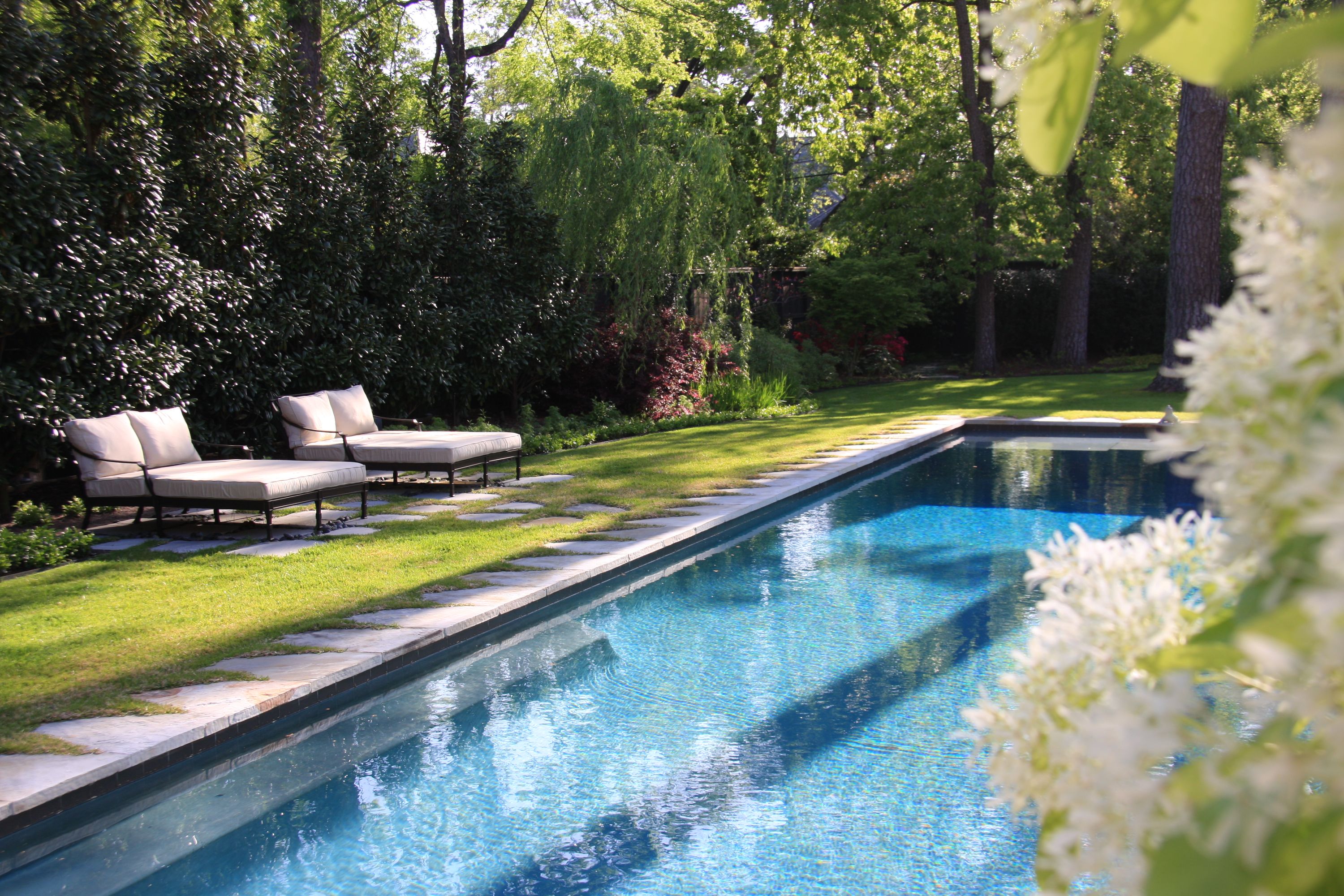
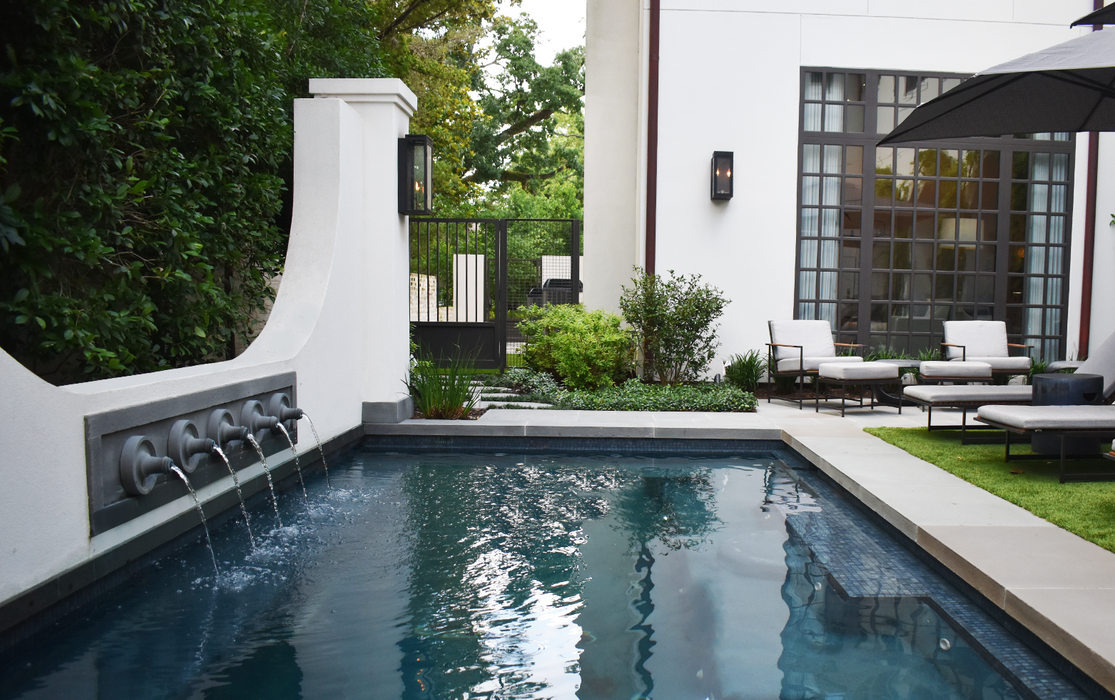
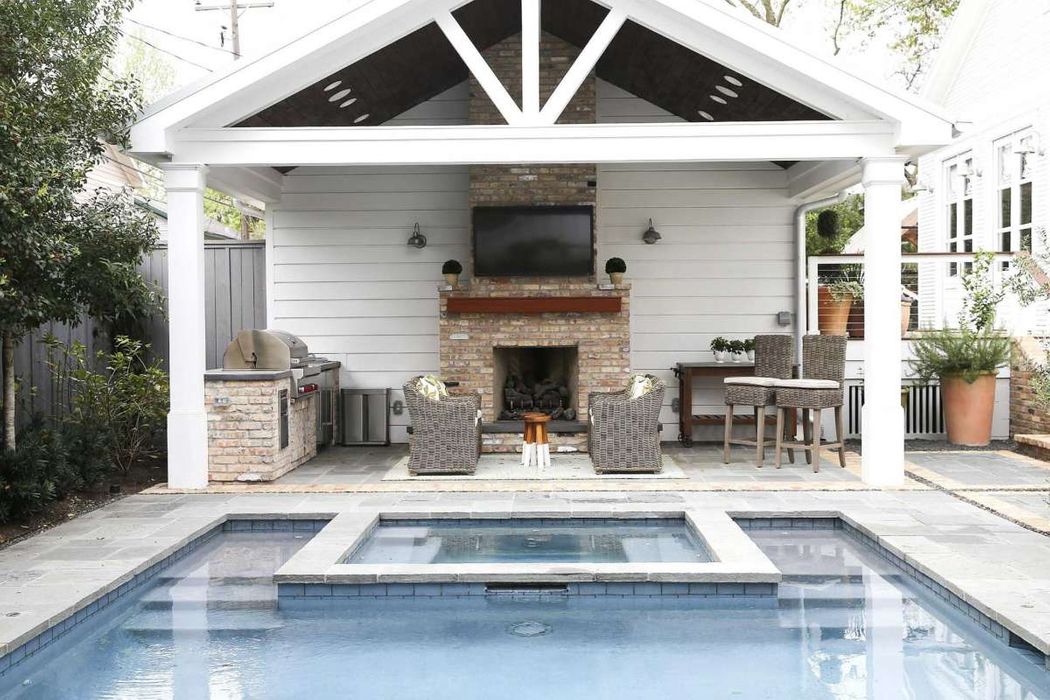
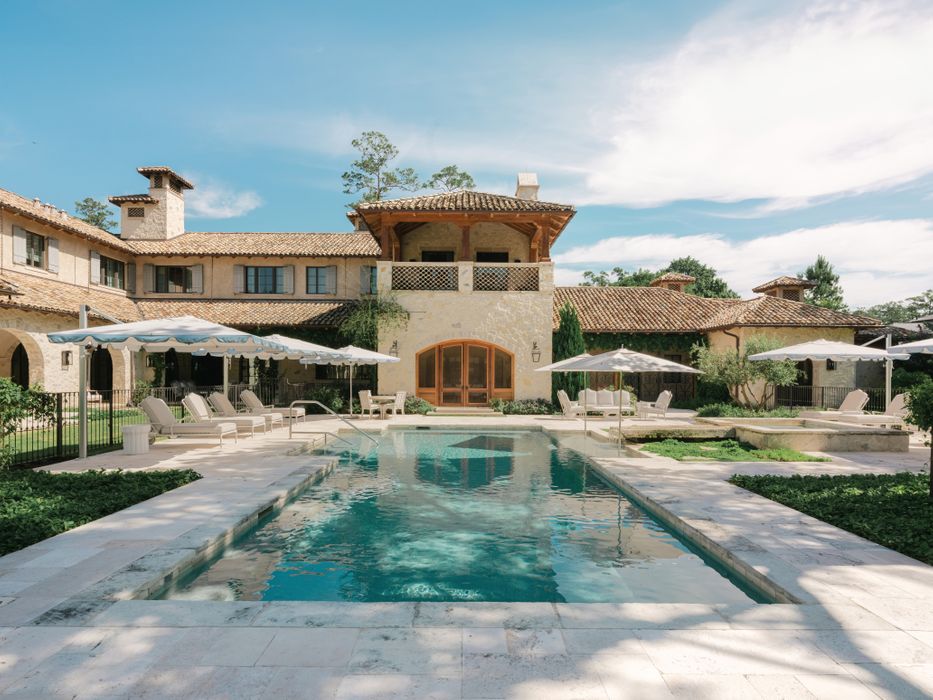
Some of the biggest challenges in a pool's design do not come from the original concept, but from the way a space is ultimately experienced once built. A layout may feel balanced in plan, yet become constrained in reality once furnishings, circulation, grade transitions, and day-to-day use are introduced. What reads clearly on paper does not always translate comfortably at ground level.
This is often where issues begin to surface, including tight circulation around seating areas, awkward spatial relationships between the pool and the surrounding landscape, or depth transitions within the pool that feel abrupt rather than intuitive. These moments may seem subtle individually, but collectively they shape how successful a space feels as a whole.
That is why early collaboration between architects, landscape architects, interior designers, and builders is so valuable. Evaluating circulation, proportion, spatial relationships, and constructability early in the process helps preserve the original design intent while improving how the experience ultimately performs.
The most enduring pool environments are rarely the most complicated. Their success typically comes from clarity of organization, restraint, and a strong understanding of scale and usability. When these elements are resolved thoughtfully, the pool becomes a natural extension of the architecture rather than a separate feature added to it.